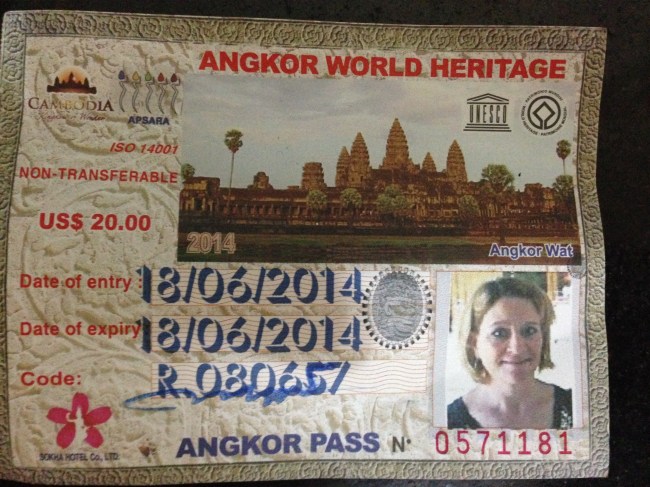
 Yesterday, I had the pleasure of touring several of the temples in the Angkor Wat area with Kanha Reath — and while (per below) the temples were amazing, I think the best part was getting to spend the day with Kanha.
  She is the owner and lead tour guide for Angkor Journeys (awarded a well-deserved 5 stars from TripAdvisor), and also a JWOC scholarship student graduate. As a matter of fact, she was one the original students that my friend, Jane, sponsored. Kanha not only runs her tour company and provides incredibly informative and fun tour commentary, but she also teaches in public school here. She is one of JWOC’s many tremendous success stories, as well as being another of the truly genuine, warm and engaged people I keep getting to meet from all across the JWOC family.
Don’t worry — I’m not going to even try to provide a travelogue on Cambodian temples here! If you’re looking for that, there are certainly a ton of great guidebooks, websites and pictures you can check out. And I also know that many of you have been here and seen it for yourselves. So, I’m going to just share a few impressions and photos of each of our main stops.
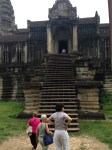
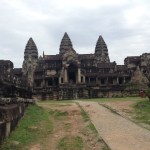
Angkor Wat
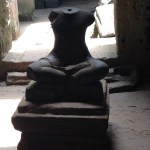
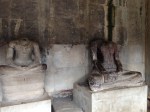
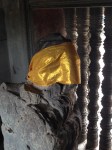
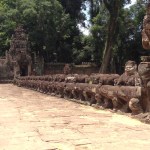
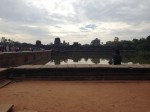
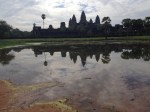
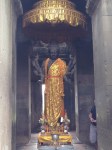
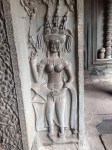
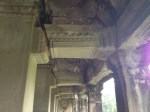
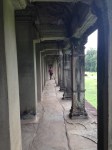
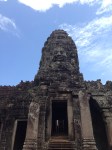
The most famous of the temples, of course. This was one of the ones originally built for Hindu worship (5 towers, tall, fairly ornate, and all oriented upwards toward the gods). Other of the temples were originally built for Buddhist worship (typically simpler architecture and design). But since the prevailing religion shifted back and forth multiple times, in many of the temples there is a mix of both Hindu and Buddhist influences, including carvings and statuary. One example that Kanha showed me was of Buddha statues where the heads had been removed and replaced with Hindu artifacts (see separate blog post for more about Buddhas and their heads…)
Angkor Wat Construction
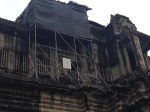
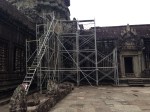
Angkor Wat is truly a world endeavor at this point as it is under the oversight of UNESCO, having been named a World Heritage Site in 1992. Apparently one part or another is consistently under construction as they continue with restoration efforts, and scaffolding crops up here and there as you walk through the grounds. (After 5 years in New York, that made me feel right at home and I almost didn’t notice it at first!).
The current project is being undertaken by Germany, but this has been going on for decades. India sponsored several projects in the 1980’s and 1990’s, and Kanha pointed out repairs that had been done by the French in the 1920’s — re-attaching an entire gallery/corridor, stretching the full length of the temple, that had fallen away.
Ta Prohm
Three of the other temples we visited were built by the same king, Jayavarman VII, one of the most powerful kings of the Khmer Empire (1181-1218). In addition to the temples, he also built roads, schools and hospitals across the Empire and is widely revered by the Cambodian people for his impact and compassion.
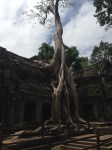
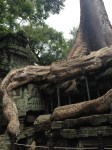
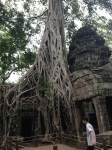
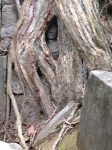
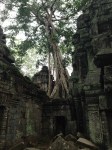
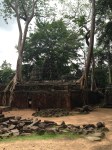
At this point, the Ta Prohm temple may almost be most famous as the “Tomb Raider” temple. It is an incredible place as the jungle has come in and overgrown the ruins, and the trees are almost more amazing than the temple itself. What was a challenge to wrap my mind around was that I was standing in a place where I was looking at and touching 300-year-old trees… which were “young” in comparison to the almost 900-year-old temple they had engulfed.
Jayavarman VII built this temple to honor his mother, and there is a room in the middle where her statue once stood. There are many holes all up and down the very high walls of the room where once upon a time jewels were put to honor her further. You could stand there and almost imagine how exquisite it would have been when the sun shone down into the room.
Preah Kahn
No pictures for this one(!), but thought it was worth mentioning as Jayavarman VII built this one to honor his father. Also had a central room for his statue with walls to hold jewels — but the holes in the walls were smaller than the ones for his mom!
Bayon
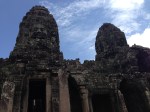
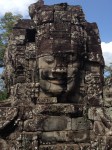
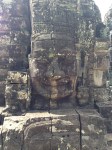
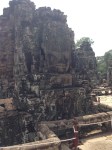
This is the main temple in Angkor Thom, the walled capital city built by Jayavaraman VII close to Angkor Wat. It is located in the exact center of the city — and is most famous for its many, many “faces”. Originally 4 each on each of 54 towers throughout the temple. Very cool… and just a bit creepy!
War & Genocide in the 20th Century
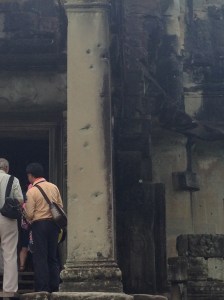
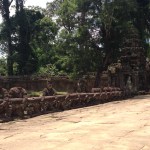
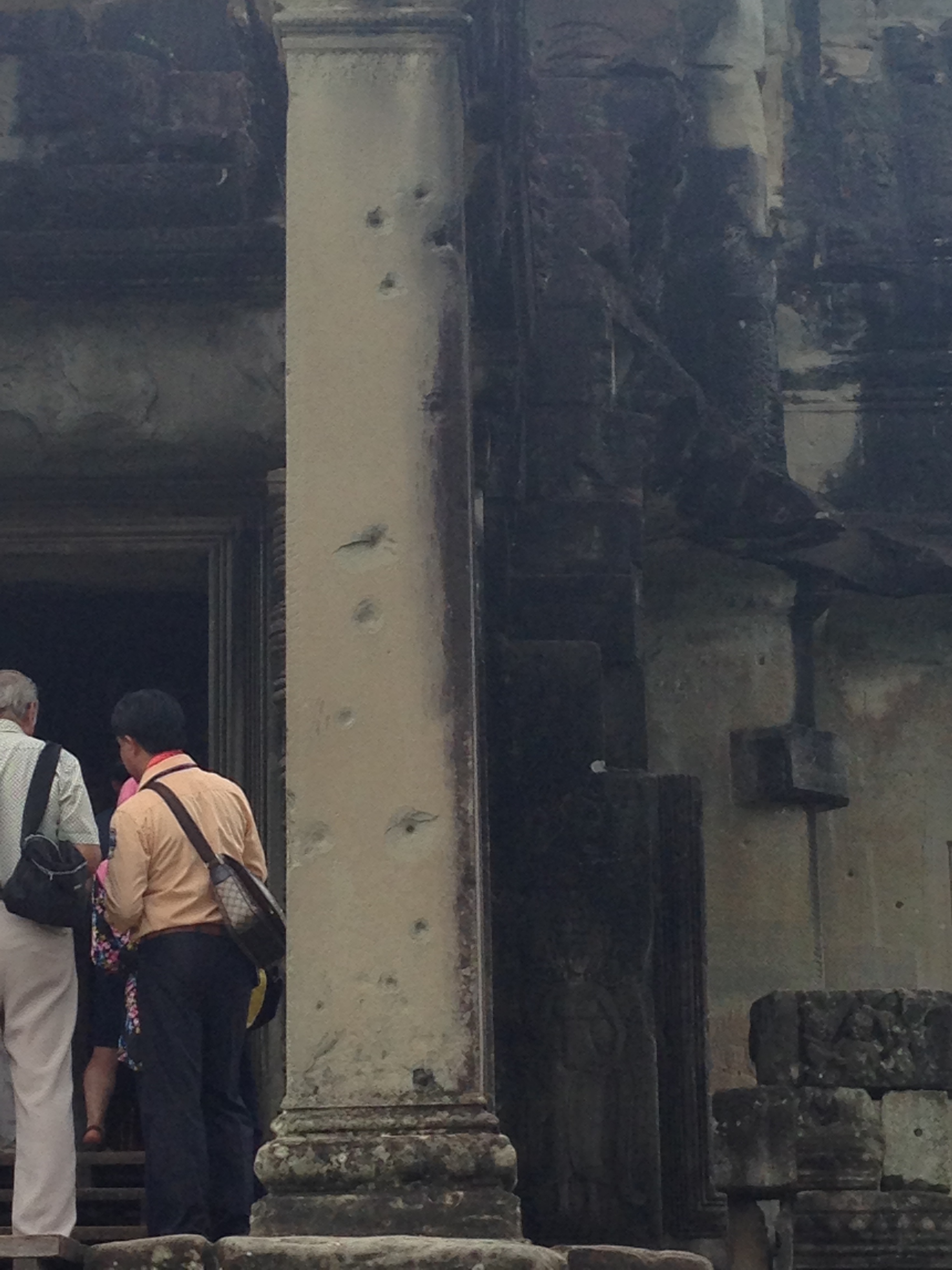
One last comment. There are so many places in conversation and in what you see almost everywhere you go that bring home the horrible and lasting impact the Khmer Rouge regime and civil war in the 2nd half of the 20th century had on this lovely country and its people. Two things of particular note during our temples tour. The bullet holes in columns at the front of Angkor Wat. And at Ta Prohm — the fact that for many years people were afraid to come near it because the Khmer Rouge had at one point used it as one of their bases and mined all of the area around it. Even once the mines were cleared, people didn’t believe it was safe, and one of the reasons that the government allowed and encouraged Tomb Raider to film there was to convince them it was safe…



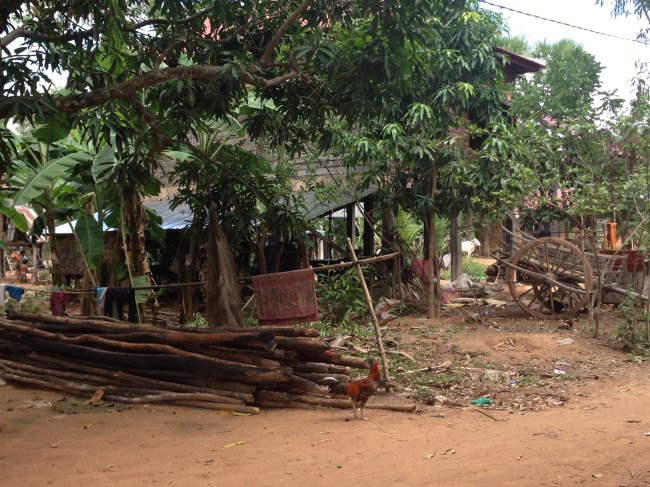
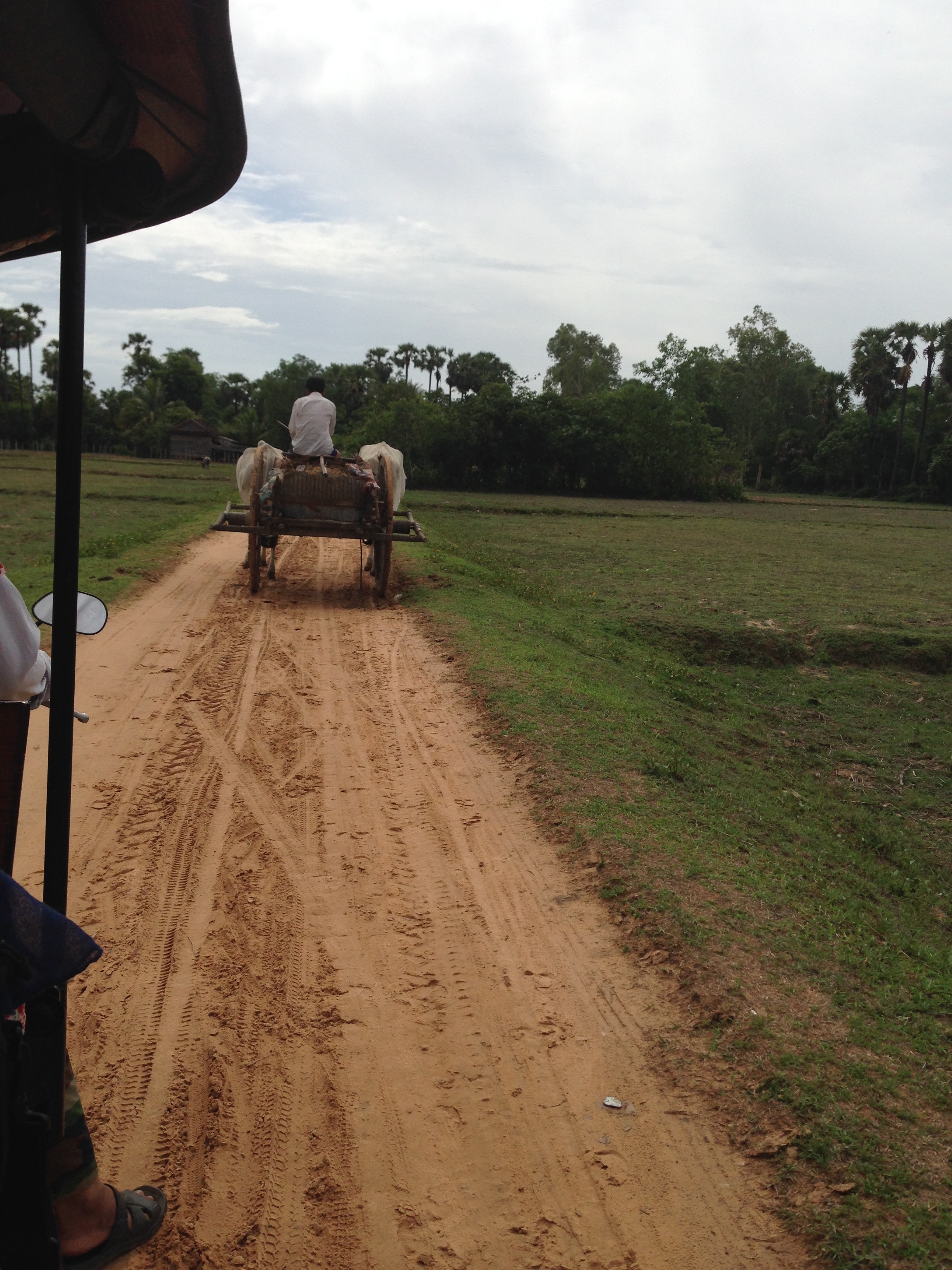
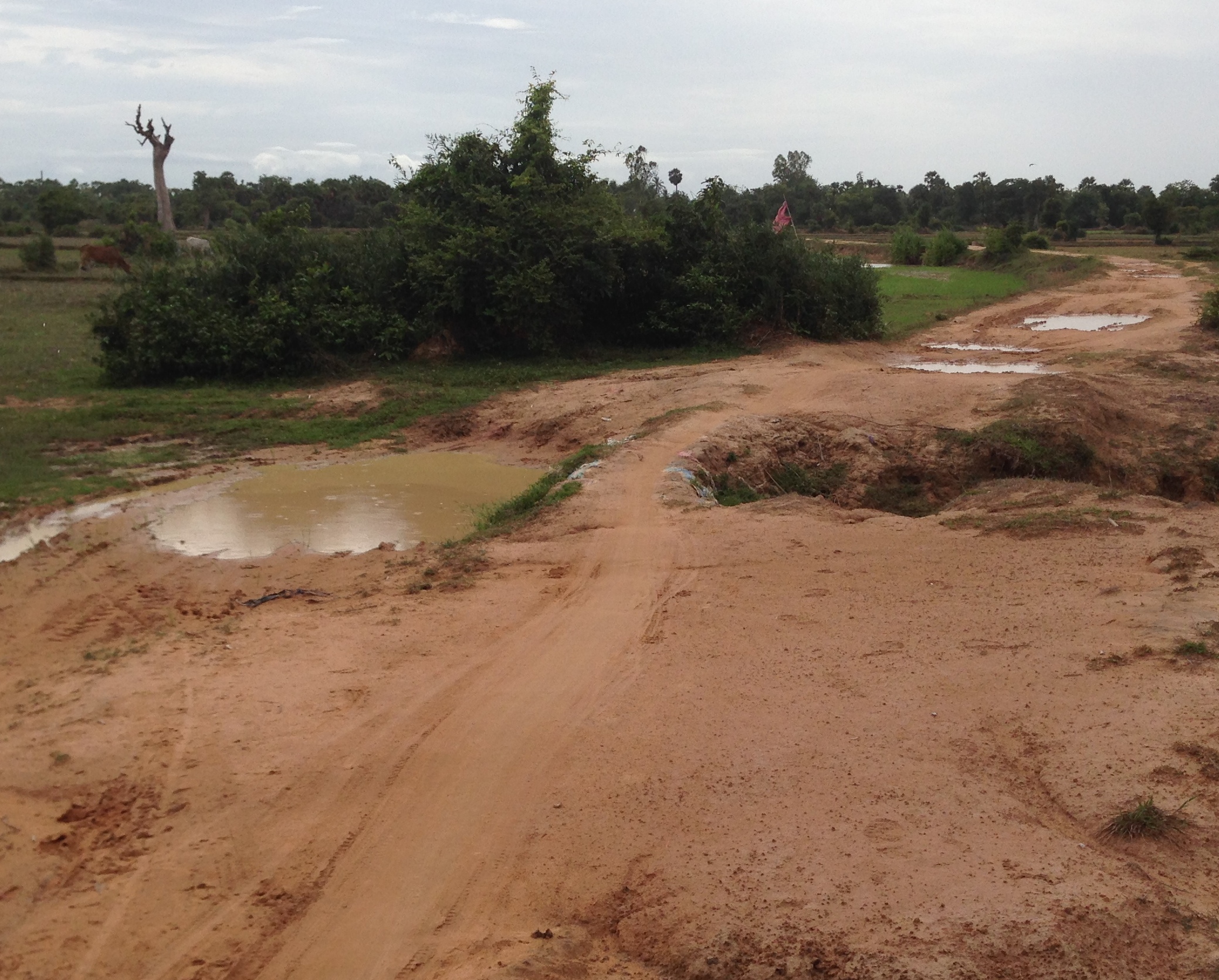
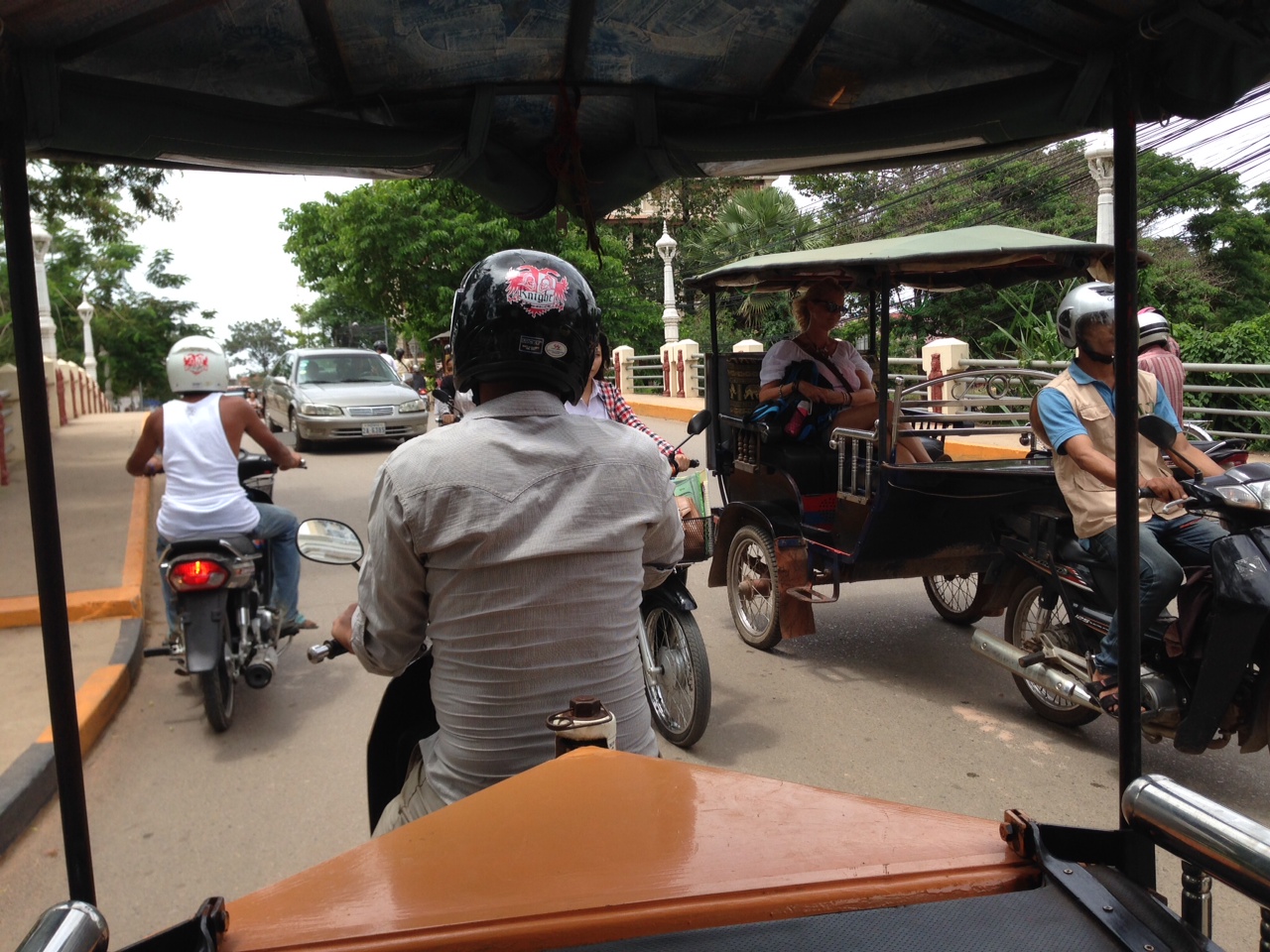
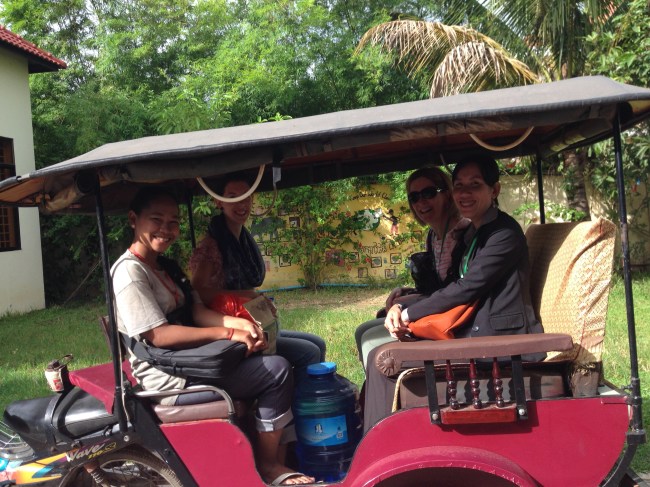 While there was lots to see along the whole journey (I plan to do an entire blog entry later on the amazing things people are able to transport via Moto!), as we got closer to the village, the trip really got interesting! We encountered uneven road conditions…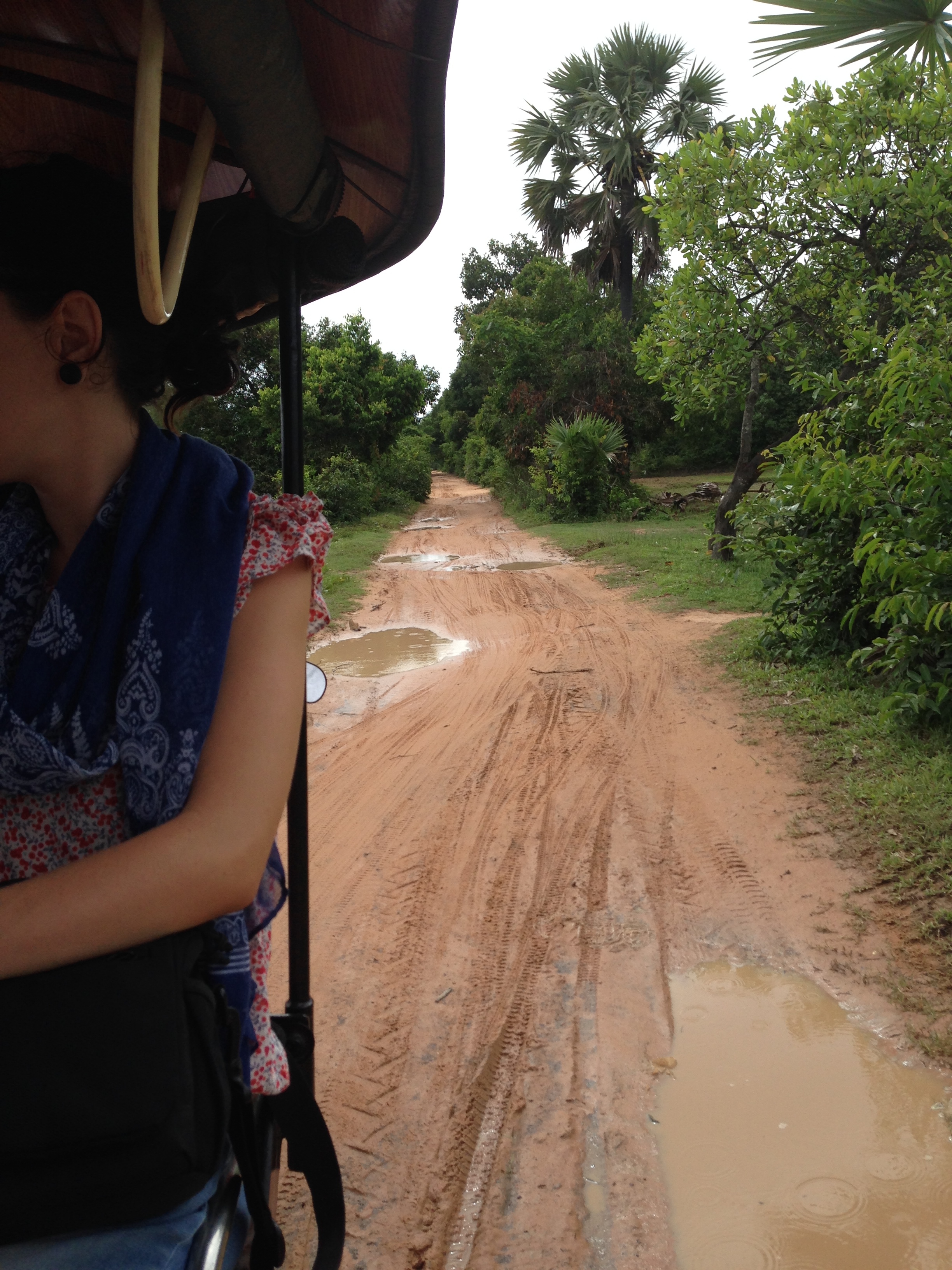










 The Next Chapter